
Deciding Between PEX and CPVC for Your Repiping Project in Apopka
Homeowners in Apopka face a critical decision when their aging plumbing systems start failing. The Orlando area’s hard water combined with chlorine-heavy municipal supply creates unique challenges that directly impact which repiping material performs best in your specific home. Is a Tankless Water Heater Right for Your Lake Nona Home?.
PEX offers superior flexibility and freeze resistance while CPVC provides rigid strength but becomes brittle in Florida’s heat. Your choice affects not just upfront costs but long-term reliability and potential insurance implications in Central Florida. Florida Building Code Commission.
The decision comes down to understanding how each material handles Orlando’s specific water chemistry, temperature fluctuations, and the hidden costs of installation in typical Apopka slab-on-grade homes. Why Old Maitland Homes Often Need Complete Copper Repiping.
Orlando Water Chemistry and Its Impact on Pipe Materials
Orlando Utilities Commission water contains approximately 2.5 parts per million chlorine and 1.2 ppm chloramines. These disinfectant levels are among the highest in Florida and create accelerated degradation patterns for different pipe materials.. Read more about Why Your Water Bill in Oviedo Is Suddenly Skyrocketing (And How to Fix It).
CPVC reacts poorly to sustained chlorine exposure. The chlorine molecules break down the polymer chains, causing yellowing, embrittlement, and eventual cracking. In Apopka homes built between 1990 and 2010, we frequently find CPVC failures around water heaters where temperatures exceed 140°F.. Read more about How to Spot a Failing Main Water Shut-Off Valve in Your Kissimmee Property.
PEX-A handles chlorine exposure significantly better due to its cross-linked molecular structure. The three-dimensional network resists chemical penetration while maintaining flexibility. PEX-B offers moderate resistance but costs less than PEX-A.
Hard water scale also affects both materials differently. Apopka’s water contains 12-15 grains per gallon hardness, leading to mineral buildup. PEX’s smooth interior resists scale adhesion better than CPVC’s slightly rougher surface.
Cost Comparison for Apopka Repiping Projects
Material costs vary significantly between PEX and CPVC options. PEX-A typically runs $0.75-$1.25 per foot while PEX-B costs $0.50-$0.90 per foot. CPVC averages $0.60-$1.00 per foot for residential grade.
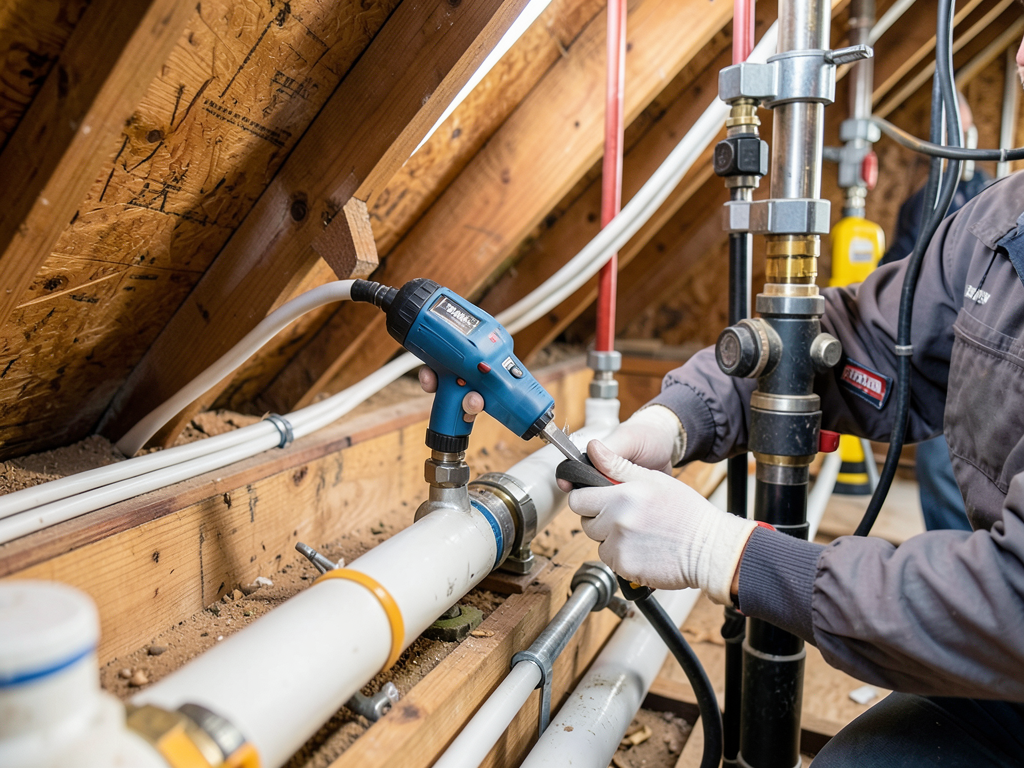
Labor costs in Apopka reflect the complexity of working in older homes. A typical 2,000-square-foot home requires 40-60 labor hours for complete repiping. PEX installation proves faster due to fewer fittings and easier routing through wall cavities.
CPVC requires more joints and precise solvent welding. Each connection point represents potential failure risk and adds 2-3 hours to installation time. The rigid nature also means more demolition for routing through existing structures.
Permit costs through Orange County Building Division average $350-$450 for residential repiping. Both materials require the same permits and inspections under Florida Building Code Chapter 25.
Insurance considerations matter in Apopka. Some carriers offer premium discounts for PEX due to its freeze resistance and lower leak probability. CPVC installations may face scrutiny in older neighborhoods with known failure patterns.
Installation Methods and Timeline Expectations
PEX installation uses either manifold systems or trunk-and-branch configurations. Manifold systems provide dedicated lines to each fixture, reducing pressure drop and improving flow consistency. This method works exceptionally well in Apopka’s slab-on-grade construction where running new lines through walls proves challenging.
CPVC installation follows traditional trunk-and-branch patterns. Rigid pipes require more precise measurements and cutting. Each 90-degree bend needs a fitting, multiplying potential leak points.
Installation timeline for a typical Apopka home spans 2-4 days. PEX projects often complete in 2 days due to faster installation. CPVC requires 3-4 days accounting for solvent welding cure times and more complex routing.
Water service interruption averages 6-8 hours for PEX versus 12-16 hours for CPVC. PEX allows pressure testing immediately after installation while CPVC needs 24-hour cure time before pressurization.
Wall repair and patching add 1-2 days regardless of material choice. PEX’s flexibility means smaller access holes in many cases. CPVC’s rigidity often requires larger openings for proper routing. Plumbing Repair Cost Guide 2026.
Performance in Apopka’s Climate Conditions
Summer temperatures in Apopka regularly exceed 95°F, creating attic temperatures over 150°F. PEX handles these extremes better than CPVC. The cross-linked structure maintains integrity while CPVC becomes increasingly brittle above 140°F.
Humidity levels averaging 75-85% year-round affect both materials differently. PEX resists moisture absorption and maintains dimensional stability. CPVC can absorb small amounts of moisture, leading to slight expansion and contraction cycles.. Read more about The Hidden Risks of Aging Cast Iron Sewer Pipes in Colonialtown.
Freeze protection represents a significant advantage for PEX in Central Florida. While freezing is rare, PEX can expand up to 10% without bursting. CPVC becomes extremely brittle below 32°F and fractures easily under stress.
UV exposure during installation poses risks for both materials. PEX degrades when exposed to sunlight for extended periods. CPVC also suffers UV damage but less severely. Both materials require protection during storage and installation.
Long-Term Durability and Warranty Considerations
PEX-A typically carries 25-year manufacturer warranties covering material defects. PEX-B warranties range from 10-25 years depending on the brand. CPVC manufacturers offer 10-15 year warranties on most residential products.
Field performance data from Apopka homes shows PEX systems lasting 30-40 years with proper installation. CPVC systems from the 1990s are now failing at 20-25 year intervals, particularly near water heaters and in attic spaces.
Chloramine resistance becomes critical for long-term performance. PEX-A maintains structural integrity even with sustained chloramine exposure. CPVC shows progressive degradation, with failure rates increasing significantly after 15 years.
Connection reliability differs between materials. PEX uses expansion fittings or crimp rings that maintain consistent seals. CPVC relies on solvent welding, which can fail if not executed perfectly or if exposed to certain chemicals over time.
Expansion and contraction rates affect system longevity. PEX expands 1 inch per 100 feet per 10°F temperature change. CPVC expands less but becomes more brittle with each thermal cycle.
Making the Right Choice for Your Apopka Home
Consider your home’s specific characteristics when choosing materials. Homes built before 1990 likely have galvanized steel or polybutylene pipes requiring replacement. Newer homes with CPVC may benefit from upgrading to PEX for improved reliability.. Read more about Choosing the Right Size Hybrid Heat Pump Water Heater for Your Ocoee Family.
Budget constraints often drive initial decisions. PEX-B offers the best value for most homeowners, balancing cost with performance. PEX-A provides maximum reliability for those prioritizing longevity over upfront savings.. Read more about What Homeowners in St. Cloud Need to Know About Polybutylene Pipe Replacement.
Future plans impact material selection. If selling within 5 years, CPVC may suffice. For long-term ownership, PEX typically proves more cost-effective over the system’s lifetime.
Insurance implications vary by carrier. Some insurers view PEX as a risk reduction feature, potentially lowering premiums. Others have no material preference but focus on installation quality and permitting compliance.
Environmental factors in Apopka favor PEX for most applications. The material’s flexibility reduces installation waste, and its longevity means fewer replacements over decades of service.
Installation Quality: The Critical Success Factor
Material choice matters less than installation quality. Both PEX and CPVC can fail prematurely if installed incorrectly. Proper support spacing, expansion loops, and protection from UV exposure determine real-world performance.
Florida Building Code requires specific installation practices for both materials. CPVC must use proper primer and cement combinations. PEX requires expansion tools for PEX-A or proper crimp ring sizing for PEX-B.
Pressure testing verifies installation integrity. PEX systems typically test at 100 psi for 15 minutes. CPVC requires 150 psi testing due to its rigid nature and higher pressure ratings.
Water hammer arrestors become more critical with CPVC due to its rigidity. PEX’s natural flexibility provides some dampening effect, though arrestors still benefit both systems.
Cross-connection prevention matters for both materials. Backflow preventers protect potable water supplies regardless of pipe material. Florida plumbing code mandates these devices for irrigation connections and certain fixtures. Who to Call for a Plumbing Emergency in Winter Park After Hours.
Frequently Asked Questions
Which material lasts longer in Orlando’s climate?
PEX typically outlasts CPVC in Central Florida by 10-15 years due to better chlorine resistance and flexibility under temperature extremes. Field data shows PEX systems functioning well beyond 30 years while CPVC from the 1990s era often fails around 20-25 years.
Does PEX affect water taste or quality?
Properly installed PEX does not affect water taste. The material is certified to NSF/ANSI 61 standards for drinking water safety. Some homeowners notice a slight plastic odor initially, but this dissipates within days of use. NSF/ANSI 61 Drinking Water Standards.
Can I mix PEX and CPVC in the same home?
Yes, mixing materials is possible using proper transition fittings. However, this approach rarely makes sense financially since you’re essentially maintaining two different systems with different failure patterns and maintenance requirements.
What permits are required for repiping in Apopka?
Orange County Building Division requires plumbing permits for whole-house repiping. Both PEX and CPVC installations need permits and inspections. Permit costs average $350-$450 for residential projects. Plumbing Clermont.
How long does a whole-house repipe take?
Most Apopka homes complete repiping in 2-4 days. PEX installations typically finish in 2 days while CPVC requires 3-4 days due to longer cure times and more complex routing requirements.
Call for Your Apopka Repiping Assessment
Understanding which material works best for your specific home requires professional evaluation. Our team examines your current plumbing condition, water quality, and home layout to recommend the optimal solution.. Read more about Modernizing the Plumbing in Your Historic Parramore Home Without Ruining the Character.
Don’t wait for a catastrophic failure. Small leaks often indicate systemic problems requiring complete repiping. Early intervention prevents water damage and reduces overall project costs.
Call (239) 467-5554 today to schedule your free repiping assessment. We’ll evaluate your current system and provide clear recommendations based on your home’s unique needs and your budget priorities.
Pick up the phone and call (239) 467-5554 before the next Orlando cold front hits. A failing pipe in freezing temperatures creates emergency situations that cost significantly more to resolve.
You may also find this helpful. Professional Plumbing Hookups for Your Windermere Kitchen or Bath Remodel.
You may also find this helpful. Comparing Luxury Rainfall Showers and High-End Fixtures for Your Hunters Creek Remodel.
{
“@context”: “https://schema.org”,
“@type”: “BlogPosting”,
“headline”: “Deciding Between PEX and CPVC for Your Repiping Project in Apopka”,
“description”: “Compare PEX vs CPVC repiping in Apopka. Learn costs, durability, and Orlando-specific water chemistry impacts on your plumbing investment.”,
“wordCount”: 1559,
“datePublished”: “2026-03-06T16:21:00.000Z”,
“dateModified”: “2026-03-06T16:21:00.000Z”,
“inLanguage”: “en-US”,
“mainEntityOfPage”: {
“@type”: “WebPage”,
“@id”: “https://grandplumbingorlando.com”
},
“publisher”: {
“@type”: “LocalBusiness”,
“name”: “Grand Plumbing Orlando”,
“url”: “https://grandplumbingorlando.com”
},
“author”: {
“@type”: “Organization”,
“name”: “Grand Plumbing Orlando”,
“url”: “https://grandplumbingorlando.com”
},
“image”: {
“@type”: “ImageObject”,
“url”: “https://grandplumbingorlando.com/wp-content/uploads/2026/03/deciding-between-pex-and-cpvc-for-your-repiping-pr-1.png”
}
}
{
“@context”: “https://schema.org”,
“@type”: “Plumber”,
“name”: “Grand Plumbing Orlando”,
“url”: “https://grandplumbingorlando.com”,
“address”: {
“@type”: “PostalAddress”,
“addressLocality”: “Orlando”
},
“areaServed”: {
“@type”: “City”,
“name”: “Orlando”
}
}
{
“@context”: “https://schema.org”,
“@type”: “FAQPage”,
“mainEntity”: [
{
“@type”: “Question”,
“name”: “Which material lasts longer in Orlando’s climate?”,
“acceptedAnswer”: {
“@type”: “Answer”,
“text”: “PEX typically outlasts CPVC in Central Florida by 10-15 years due to better chlorine resistance and flexibility under temperature extremes. Field data shows PEX systems functioning well beyond 30 years while CPVC from the 1990s era often fails around 20-25 years.”
}
},
{
“@type”: “Question”,
“name”: “Does PEX affect water taste or quality?”,
“acceptedAnswer”: {
“@type”: “Answer”,
“text”: “Properly installed PEX does not affect water taste. The material is certified to NSF/ANSI 61 standards for drinking water safety. Some homeowners notice a slight plastic odor initially, but this dissipates within days of use. NSF/ANSI 61 Drinking Water Standards.”
}
},
{
“@type”: “Question”,
“name”: “Can I mix PEX and CPVC in the same home?”,
“acceptedAnswer”: {
“@type”: “Answer”,
“text”: “Yes, mixing materials is possible using proper transition fittings. However, this approach rarely makes sense financially since you’re essentially maintaining two different systems with different failure patterns and maintenance requirements.”
}
},
{
“@type”: “Question”,
“name”: “What permits are required for repiping in Apopka?”,
“acceptedAnswer”: {
“@type”: “Answer”,
“text”: “Orange County Building Division requires plumbing permits for whole-house repiping. Both PEX and CPVC installations need permits and inspections. Permit costs average $350-$450 for residential projects. Plumbing Clermont.”
}
},
{
“@type”: “Question”,
“name”: “How long does a whole-house repipe take?”,
“acceptedAnswer”: {
“@type”: “Answer”,
“text”: “Most Apopka homes complete repiping in 2-4 days. PEX installations typically finish in 2 days while CPVC requires 3-4 days due to longer cure times and more complex routing requirements.”
}
}
]
}
{
“@context”: “https://schema.org”,
“@type”: “BreadcrumbList”,
“itemListElement”: [
{
“@type”: “ListItem”,
“position”: 1,
“name”: “Home”,
“item”: “https://grandplumbingorlando.com”
},
{
“@type”: “ListItem”,
“position”: 2,
“name”: “Blog”,
“item”: “https://grandplumbingorlando.com/blog”
},
{
“@type”: “ListItem”,
“position”: 3,
“name”: “Deciding Between PEX and CPVC for Your Repiping Project in Apopka”
}
]
}
{
“@context”: “https://schema.org”,
“@type”: “Service”,
“serviceType”: “Plumbing”,
“provider”: {
“@type”: “LocalBusiness”,
“name”: “Grand Plumbing Orlando”,
“url”: “https://grandplumbingorlando.com”
},
“areaServed”: {
“@type”: “City”,
“name”: “Orlando”
},
“description”: “Compare PEX vs CPVC repiping in Apopka. Learn costs, durability, and Orlando-specific water chemistry impacts on your plumbing investment.”
}