




menu

No Hot Water Diagnosis in Orlando – Expert Problem Identification in Under 60 Minutes

When you turn the tap and get cold water instead of hot, our diagnostic technicians pinpoint the exact cause of your no hot water problem fast, giving you a clear repair plan with no guesswork.

Slider Image 1
Slider Image 2
Slider Image 3
Slider Image 4
Slider Image 5
Slider Image 7
Slider Image 8
Slider Image 9
Slider Image 10
Slider Image 11

Why Orlando Water Heaters Fail Without Warning

You step into the shower expecting warmth and get an icy blast instead. No hot water is one of the most disruptive plumbing emergencies you can face in your Orlando home, and it rarely happens for just one reason.

Orlando's hard water creates a perfect storm for water heater failure. The high mineral content in our municipal supply accelerates sediment buildup at the bottom of your tank, which acts like an insulating blanket between the heating element and the water. When you turn on the hot tap and nothing happens, you need to identify water heater issues quickly before a minor problem becomes a complete system replacement.

Most homeowners try to troubleshoot water heater problems on their own by checking the pilot light or flipping a breaker. Those steps help sometimes, but they miss the real culprits. A faulty thermostat can prevent your heating element from activating. A tripped high-limit switch signals overheating inside the tank. A failed dip tube sends cold water directly to your hot water outlet instead of routing it to the bottom for heating.

The causes of no hot water range from simple electrical disconnects to corroded anode rods that have allowed tank rust to compromise your entire system. Without proper diagnostic tools, you cannot see what is happening inside a sealed tank or behind an access panel. You need someone who can diagnose lack of hot water using thermal imaging, voltage testing, and pressure measurements.

Orlando's humidity and temperature swings also stress water heater components. Condensation around electrical connections can cause shorts. Thermal expansion from our hot summers and occasional cold snaps fatigues tank seams and valve seats. These water heater malfunction symptoms do not fix themselves, and waiting only increases the damage.

Why Orlando Water Heaters Fail Without Warning
How We Diagnose Your Water Heater in Three Phases

How We Diagnose Your Water Heater in Three Phases

When you call Grand Plumbing Orlando for a no hot water diagnosis, we do not guess. We follow a systematic troubleshooting protocol that isolates the failure point in under an hour.

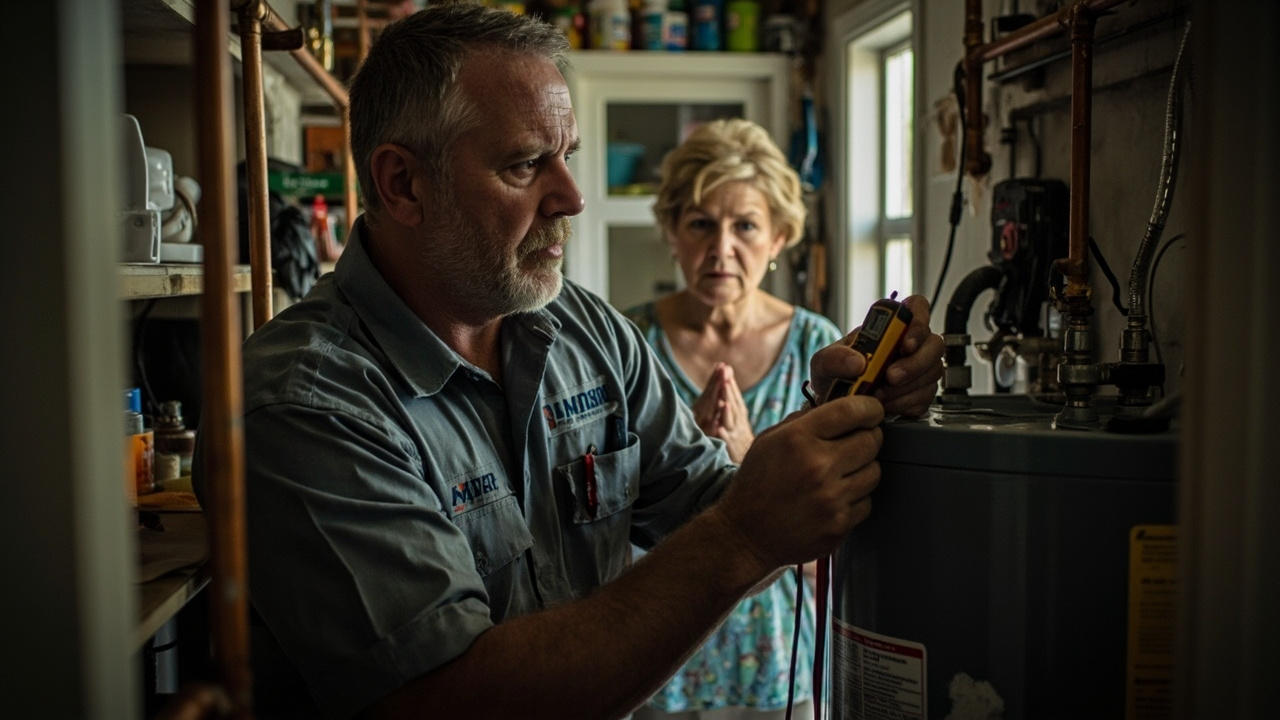
First, we test your electrical supply or gas flow depending on your fuel type. For electric units, we use a multimeter to verify voltage at the breaker, the disconnect switch, and each heating element. We check for continuity across the upper and lower thermostats and test the high-limit switch for proper reset function. For gas water heaters, we inspect the thermocouple or flame sensor, verify gas pressure at the valve, and check for proper venting and draft.

Next, we assess water flow and pressure inside the tank. We drain a sample from the drain valve to check sediment levels. Heavy sediment means your heating elements are buried and cannot transfer heat efficiently. We measure inlet and outlet temperatures with an infrared thermometer to see if the tank is heating at all or if a dip tube failure is mixing cold and hot water prematurely.

Finally, we inspect the tank itself for structural integrity. We look for rust stains, moisture around seams, and corrosion on the pressure relief valve. We test the anode rod if accessible. This sacrificial component protects your tank from corrosion, and once it dissolves completely, your tank begins to rust from the inside out.

Our technicians carry diagnostic equipment most homeowners do not own: thermal cameras, digital manometers, combustion analyzers for gas units, and amp clamps for electrical load testing. We document every reading and explain what each measurement means. You get a written diagnostic report that identifies the exact problem, the repair options, and the expected lifespan of your current unit if we make the fix.

What Happens During Your Water Heater Diagnostic Visit

No Hot Water Diagnosis in Orlando – Expert Problem Identification in Under 60 Minutes
01

Initial System Assessment

Our technician arrives with a full diagnostic kit and begins by asking when you first noticed the problem and whether you have any hot water at all or none. We check your breaker panel or gas valve, inspect visible connections, and run hot water at multiple fixtures to measure temperature and flow. This takes about 10 minutes and rules out simple fixes like a tripped breaker or closed valve.
02

Component Testing

We remove access panels and test each heating element, thermostat, and safety switch with precision tools. For gas units, we verify ignition, flame characteristics, and exhaust draft. We drain the tank partially to check sediment levels and inspect the anode rod condition. We measure amperage draw on electric elements to detect shorts or failing components. This phase takes 20 to 30 minutes and identifies the failed part.
03

Repair Recommendation

Once we identify the cause, we explain the problem in plain language and show you the failed component. You get a written estimate for the repair and an honest assessment of whether fixing your current unit makes sense or whether replacement is the smarter investment. We never upsell. If a 50-dollar thermostat solves your problem, we tell you that. If your tank is rusted through, we tell you that too.

Why Orlando Homeowners Trust Our Diagnostic Accuracy

A misdiagnosis costs you time and money. You do not want a technician who replaces parts randomly until something works. You want someone who knows the difference between a failed heating element and a tripped high-limit switch, because those two problems require completely different fixes.

Grand Plumbing Orlando has diagnosed thousands of water heaters across Orlando, Winter Park, and the surrounding metro area. We know how hard water affects tank lifespan here. We understand that homes built in the 1980s and 1990s in neighborhoods like College Park and Baldwin Park often have original water heaters nearing the end of their rated lifespan. We see the same sediment patterns, the same thermostat failures, and the same anode rod corrosion that plague Central Florida water heaters.

Our technicians train continuously on both traditional tank water heaters and newer tankless systems. We work on electric, natural gas, and propane units from every major manufacturer. We carry OEM parts on our trucks, so if your diagnosis reveals a common failure like a burned-out element or a faulty gas valve, we can often complete the repair the same day.

We also know Orlando's building codes and permit requirements. If your water heater needs replacement, we pull the proper permits and install to current Florida Building Code standards, including proper venting, earthquake strapping where required, and expansion tank installation. You get a system that passes inspection the first time.

Most importantly, we give you the truth. If your 15-year-old tank is rusted and leaking, we do not waste your money replacing a thermostat. If your five-year-old unit just needs a new element, we do not push you toward an unnecessary replacement. Our reputation depends on honest diagnostics and reliable repairs.

What You Can Expect From Our Diagnostic Service

Fast Response Times

We know that no hot water disrupts your entire household. You cannot shower, wash dishes, or do laundry. That is why we offer same-day diagnostic appointments for most Orlando-area calls. When you contact us in the morning, we can usually have a technician at your door by early afternoon. For true emergencies like a leaking tank or gas odor, we respond even faster. Our goal is to identify your problem within hours, not days, so you can make an informed decision about repairs quickly.

Thorough Testing Process

Our diagnostic visit is not a quick glance and a guess. We spend 45 to 60 minutes testing every component that could cause your no hot water problem. You watch the process if you want, and we explain each test as we perform it. We measure voltage, check continuity, test pressure relief valves, inspect anode rods, and analyze sediment levels. You receive a detailed written report that documents every finding. This thoroughness ensures we do not miss hidden problems that could cause another failure next month.

Clear Repair Options

Once we complete the diagnosis, you get a written estimate for every repair option. If your water heater needs a new heating element, we quote that repair. If the tank itself is failing, we quote replacement. We explain the pros and cons of each choice, including how much additional life you can expect from a repair versus replacement. You make the final decision with complete information. We do not pressure you or use scare tactics. Our job is to give you the facts so you can choose what makes sense for your budget and your home.

Ongoing Support

After we complete your repair or replacement, we do not disappear. You get detailed care instructions for your water heater, including recommended maintenance schedules to prevent future problems. We offer annual flushing services to remove sediment buildup, anode rod inspections, and pressure relief valve testing. If you experience any issues after our work, you can call us directly. We stand behind every diagnosis and every repair we complete. Our goal is to keep your water heater running reliably for years, not just to get hot water flowing again today.

Frequently Asked Questions

You Have Questions,
We Have Answers

What is the most common cause of no hot water? +

A failed heating element is the most common cause of no hot water in Orlando homes. Over time, mineral deposits from hard water corrode the element, preventing it from heating properly. For gas water heaters, the pilot light often goes out due to a faulty thermocouple or gas valve. Tripped circuit breakers also cause sudden hot water loss in electric units. Orlando's humid climate accelerates tank corrosion, making these failures more frequent. Check your breaker panel first, then inspect the pilot light if you have gas. If neither fixes the issue, you need professional diagnosis.

How to diagnose no hot water? +

Start by checking your circuit breaker for tripped switches on electric water heaters. For gas units, verify the pilot light is lit and the gas valve is open. Test your hot water at multiple faucets to confirm it's a heater issue, not a single fixture problem. Check the temperature setting on the thermostat, which should read 120-140 degrees. Inspect for water pooling around the tank base, which signals a leak. If you hear rumbling or popping sounds, sediment buildup is likely choking your system. Orlando's mineral-heavy water makes regular flushing necessary to prevent these failures.

Is it an emergency if you don't have hot water? +

No hot water is not typically a life-threatening emergency, but it disrupts daily hygiene and sanitation. For Orlando families with young children or elderly residents who need regular bathing, it becomes urgent quickly. If your lack of hot water comes with gas odors, sparking sounds, or water pooling around the unit, call a plumber immediately. These signs indicate dangerous leaks or electrical failures. For standard hot water loss without hazardous symptoms, you can wait until morning for service. However, in Florida's humid climate, going days without hot water creates hygiene challenges you should address promptly.

Why have I suddenly got no hot water? +

Sudden hot water loss usually means a component failed without warning. Electric water heaters lose hot water when a heating element burns out or a thermostat fails. Gas units stop heating when the pilot light extinguishes or the gas control valve malfunctions. Tripped breakers cause instant loss on electric models. Orlando's hard water accelerates sediment buildup, which can crack heating elements suddenly. A leak in the tank drains hot water faster than your system can reheat it. If you recently experienced a power surge or storm, electrical components may have fried, requiring immediate replacement.

Why is my hot water not working but the cold is? +

Your hot water system is isolated from your cold water supply. Cold water enters the heater, gets heated, then flows to your fixtures through separate hot water lines. When hot water stops but cold continues, the issue is confined to your water heater or hot water piping. The heating element, thermostat, or gas burner has likely failed. In Orlando homes, corroded dip tubes sometimes break, allowing cold water to mix at the top instead of heating from the bottom. Check if your water heater breaker tripped or the pilot light went out before calling a plumber.

How long can they leave you with no hot water? +

Florida law does not specify a maximum timeframe for landlords to restore hot water, but it is considered an essential service under habitability standards. Most landlords must address no hot water within 24 to 72 hours. Document the issue in writing immediately and send it to your property manager. If they delay unreasonably, you can request rent reduction or hire a plumber yourself and deduct the cost from rent, but follow legal procedures carefully. For homeowners, insurance rarely covers the delay itself, only resulting damage. Do not wait longer than a few days without escalating the issue.

When should I call a plumber for no hot water? +

Call a plumber when basic troubleshooting fails to restore hot water. If you checked the breaker and pilot light with no success, you need professional diagnosis. Water pooling around the tank, rust-colored hot water, or loud banging noises require immediate plumber attention. When you have zero hot water for more than a few hours after confirming power and gas supply, the heating elements or gas valve likely failed. Orlando's hard water causes frequent element failures. If your water heater is over 10 years old and stops producing hot water, replacement may be more cost-effective than repair.

What is the most common part failure that causes no heat? +

The heating element fails most often in electric water heaters, especially in Orlando where hard water accelerates corrosion. For gas water heaters, the thermocouple is the most common failure point. This safety device shuts off gas flow when it malfunctions, extinguishing the pilot light. Both parts wear out from constant thermal cycling and mineral exposure. The upper heating element typically fails first because it works hardest to maintain temperature. Thermostats also fail frequently but are less common than element burnout. These components are replaceable, but diagnosis requires shutting off power and draining the tank.

How to reset a hot water system? +

For electric water heaters, flip the breaker off for 30 seconds, then back on. This resets the high-limit switch that may have tripped. For gas units, turn the gas control knob to the off position, wait five minutes for gas to clear, then relight the pilot following the instructions on the tank label. Press the reset button on the high-temperature cutoff if your model has one. If the system does not stay lit or power on after resetting, you have a component failure requiring professional repair. Do not attempt repeated resets, as this indicates a safety issue.

Who do you call when your water doesn't get hot? +

Call a licensed plumber who specializes in water heater repair. Plumbers diagnose heating element failures, thermostat issues, and gas valve problems quickly. For Orlando homes, choose a plumber familiar with hard water damage and local code requirements. If you smell gas or see sparking, shut off your water heater immediately and call emergency plumbing services. Do not call an electrician first unless you confirmed the issue is only breaker-related. Water heater diagnosis requires plumbing expertise to safely drain tanks, test components, and replace faulty parts without flooding your home or creating gas hazards.

How Orlando's Hard Water Accelerates Water Heater Failure

Orlando's municipal water supply contains high levels of dissolved calcium and magnesium, which makes it some of the hardest water in Florida. When your water heater operates, these minerals precipitate out of solution as the water heats and settle at the bottom of the tank as sediment. Over time, this layer grows thicker and insulates the heating elements from the water, forcing them to work harder and run longer to achieve the same temperature. This accelerates element burnout and increases your energy bills. In Orlando homes without water softeners, sediment accumulation can reduce a water heater's effective lifespan by three to five years compared to the manufacturer's rating. Regular diagnostics catch this problem before it causes complete failure.

Grand Plumbing Orlando understands the unique challenges Central Florida water chemistry creates for residential water heaters. We have worked in every Orlando neighborhood from Metrowest to Avalon Park, and we know how local water conditions affect different water heater brands and models. Our technicians recognize the specific failure patterns that hard water causes and can recommend solutions like sediment flushing schedules or water softener installation to extend your equipment life. When you choose a local plumbing company with years of Orlando-specific experience, you get diagnostics that account for the environmental factors affecting your home, not just generic troubleshooting steps from a manual.
Plumbing Services in The Orlando Area

Our central location allows us to efficiently dispatch our professional plumbing crews across the entire Orlando metropolitan area and its surrounding suburbs. We invite all our clients to view our service map to confirm coverage and to see the extent of the communities we proudly serve. Trust us to be there quickly, offering the same level of Grand Plumbing expertise wherever you are in the region.

Address:
Grand Plumbing Orlando, 618 E South St, Orlando, FL, 32801

Additional Services We Offer

Our news updates

Latest Articles & News from The Blogs

Choosing the Best Kitchen Sink Material to Hide Hard Water Spots in Ocoee If you live in Ocoee, you already…

Choosing the Best Kitchen Sink Material to Hide Hard Water Spots in Ocoee

Choosing the Best Kitchen Sink Material to Hide Hard Water Spots in Ocoee If you live in Ocoee, you already…

French Drains vs Catch Basins (Solving Backyard Water Pooling in Casselberry)

French Drains vs Catch Basins (Solving Backyard Water Pooling in Casselberry) Water pooling in your Casselberry backyard after a summer…

Are Touchless Kitchen Faucets Actually Reliable for Your Winter Park Home?

Are Touchless Kitchen Faucets Actually Reliable for Your Winter Park Home Touchless kitchen faucets promise convenience and hygiene but Winter…

Contact Us

Do not spend another night without hot water. Call Grand Plumbing Orlando at (239) 467-5554 now to schedule your diagnostic appointment. We will identify the problem, explain your options, and get your hot water flowing again fast.